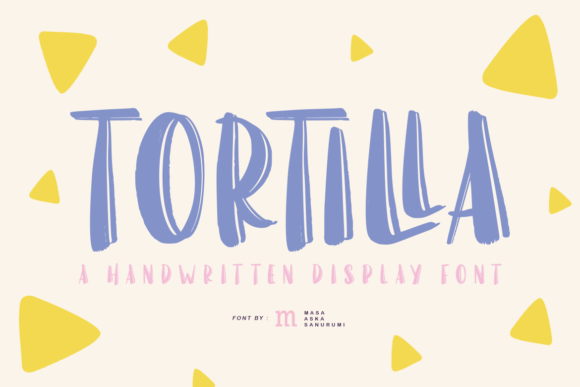
Tortilla: A Handwritten Font for Creative Expression
Tortilla is a handwritten display font that brings a sense of playfulness and warmth to any design project. Its unique character makes it ideal for applications where a personal touch is desired, such as greeting cards, logos, and headlines. The font’s clean lines and expressive strokes give it a distinctive feel that sets it apart from more rigid or mechanical typefaces.
Designed with creativity in mind, Tortilla offers a versatile solution for designers looking to add a human element to their work. Whether used in print or digital formats, its natural appearance can enhance the visual appeal of a wide range of materials. The font’s readability at larger sizes makes it particularly well-suited for titles and headings, while its casual style adds a friendly tone to any message.
What Makes Tortilla Unique?
Tortilla stands out due to its combination of simplicity and expressiveness. Unlike many other handwritten fonts that may appear too chaotic or inconsistent, Tortilla maintains a balanced structure that ensures clarity without sacrificing personality. This makes it an excellent choice for projects where legibility is important but a custom, handcrafted look is also desired.
The font’s design incorporates subtle variations in stroke thickness and letterforms, which contribute to its organic feel. These details make it more engaging than standard sans-serif or serif fonts, especially when used in contexts that benefit from a more approachable aesthetic. For example, a greeting card using Tortilla might feel more heartfelt and personal compared to one using a more formal typeface.
Comparing Tortilla to Similar Fonts
When evaluating fonts for creative projects, it’s helpful to consider how different options align with specific goals. Tortilla shares some similarities with other handwritten display fonts, such as those designed for branding or editorial use. However, it differs in its balance between spontaneity and control.
Fonts like Brush Script or Lobster offer a more fluid, artistic style, often leaning toward the ornate or dramatic. While these can be effective for certain applications, they may not always be suitable for more professional or minimalist designs. Tortilla, by contrast, provides a middle ground—its playful yet refined appearance allows it to fit into a broader range of styles and contexts.
For users who prefer a more structured approach, Tortilla’s consistent spacing and proportions make it easier to integrate into layouts without requiring extensive adjustments. This can be a significant advantage over fonts that are more irregular or unpredictable in their design.
Best Use Cases for Tortilla
Tortilla excels in situations where a friendly, informal tone is appropriate. It works well for branding elements such as logos, social media handles, and website headers. Its readability at larger sizes also makes it a strong candidate for posters, banners, and other eye-catching materials.
In the realm of print design, Tortilla can elevate the look of business cards, invitations, and packaging. Its handwritten quality adds a personal touch that can differentiate a product or service from more generic alternatives. For digital projects, it can be used in web design, app interfaces, or email newsletters to create a more engaging user experience.
One practical example is a small business owner creating a logo for a boutique coffee shop. Using Tortilla could convey a sense of authenticity and warmth that aligns with the brand’s identity. Similarly, a designer working on a children’s book might find Tortilla useful for chapter titles or illustrations, as its playful style complements the content.
Limitations and Tradeoffs
While Tortilla has many strengths, it may not be the best choice for every situation. Its handwritten nature means it can sometimes lack the precision and uniformity of more traditional typefaces. This could be a drawback in projects that require strict consistency, such as technical documents or corporate branding where a more neutral style is preferred.
Additionally, Tortilla may not be as effective at smaller sizes, where its details could become less readable. In such cases, alternative fonts that maintain clarity at reduced scales might be more suitable. Designers should also consider the context in which the font will be used—some environments, such as high-end fashion or luxury branding, may favor more refined or modern typefaces over a more casual style.
When to Choose Tortilla
Tortilla is a good fit for projects that aim to convey a sense of warmth, creativity, or individuality. It’s particularly well-suited for brands or products targeting younger audiences or those seeking a more personal connection with their audience. For instance, a wedding planner might use Tortilla for event invitations to create a more intimate and memorable feel.
It’s also a strong option for designers who want to add a unique visual element without overwhelming the overall composition. By pairing Tortilla with simpler, more neutral fonts, they can achieve a balanced and cohesive look. This approach allows the font to stand out while still maintaining professionalism and clarity.
Alternative Options to Consider
If a more formal or structured style is needed, alternatives such as Montserrat or Lato might be better suited for the task. These fonts offer clean, modern aesthetics that work well in a variety of settings, including corporate communications and digital interfaces. For more artistic or decorative purposes, fonts like Great Vibes or Dancing Script could provide a more elaborate or stylized appearance.
Ultimately, the choice of font depends on the specific needs of the project. Tortilla is a valuable tool for designers looking to infuse their work with a sense of creativity and personality, but it’s important to evaluate all available options to ensure the best possible outcome.
By understanding the strengths and limitations of Tortilla, designers can make informed decisions about when and how to use it effectively. Whether used as a primary headline font or as a complementary element, Tortilla offers a unique way to express ideas and connect with audiences through typography.